A Practical Review of the Outline Farm Equipment Clipart Set for Embroidery
As a designer who regularly translates digital designs into stitched reality, my first question with any new graphic is always: how will this actually look when it’s embroidered? Today, I’m looking at the Outline Farm Equipment Clipart Set from the perspective of an embroidery practitioner. This isn’t about the file specs; it’s about the practical journey from a digital graphic to a finished, embroidered product.
The First Impression: Clean Lines and a Nostalgic Charm
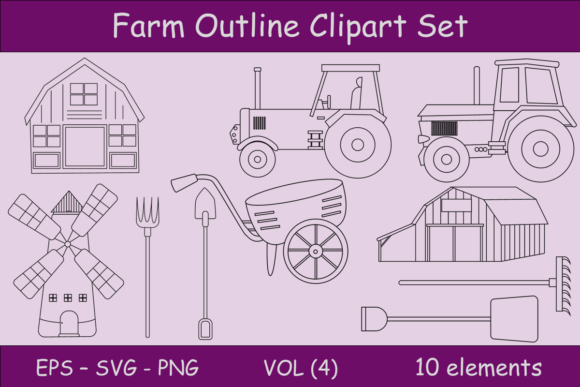
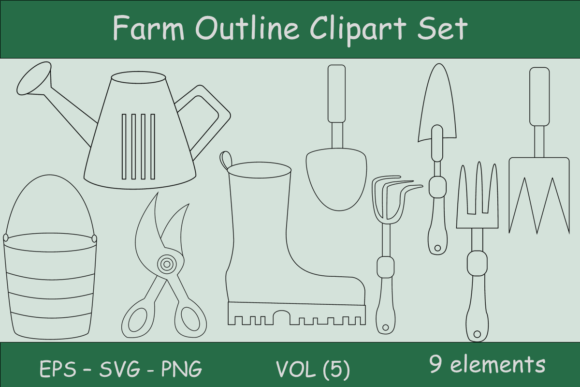
The set presents nine farming tool outlines—things like tractors, plows, and pitchforks. Immediately, the style feels clean, almost rustic. The outlines are bold and well-defined, without interior clutter. This is a significant advantage for embroidery. A design packed with tiny internal details can become a muddy, dense stitch area, losing clarity. Here, the open, outlined shapes promise good stitch definition. They evoke a mood of straightforward, honest work—a nostalgic charm that’s perfect for personalized gifts, boutique kitchen towels, or a custom apron for someone who loves their garden.
Where This Set Naturally Belongs in Embroidery
Let’s picture a real scenario. A client requests a custom embroidered tote bag for a farmer’s market vendor. They want something recognizable but not overly commercial. One of these tractor or wagon outlines, stitched in a single color thread—maybe a deep green or brick red—on a natural canvas bag would be perfect. The clean outline would stitch up crisply, conveying the theme without feeling heavy or overly detailed.
This set naturally extends to a wide range of embroidery projects. The bold outlines are ideal for apparel decoration: a single element on the sleeve of a sweatshirt, a small cluster on a baby’s romper for a "farm baby" gift, or centered on a cap. Because they are outlines, they lend themselves beautifully to satin stitch borders or even running stitch interpretations for a more handmade, sketch-like feel. They’d make excellent, simple embroidered patches. For small business merchandise, like branded tea towels or pillow covers for a rustic decor shop, these graphics provide consistent, recognizable branding elements.
Visual Appeal and Stitching Clarity: A Designer’s Assessment
The true value for an embroidery designer is in the stitch translation. Open outlines mean lower stitch density. This is a practical win: faster stitch-out times, less thread usage, and a lighter, more flexible finish on fabrics, especially on stretchy fabrics like t-shirts where dense fills can stiffen the material. The clarity of each shape should remain high after stitching, which boosts the perceived quality of the finished product. For a customer or a gift recipient, a clear, crisp emblem feels more professional and valuable than a blurry, overcrowded one.
This clarity directly impacts customer trust and engagement. In an Etsy listing or at a craft fair, a clean embroidered item communicates care and skill. It tells the buyer, "This was executed with attention to detail." For personalized gifts like a holiday-present apron or a nursery blanket, the nostalgic, friendly personality of these tools adds a layer of warmth and recognition.
Careful Application: Where to Pay Attention
No design is universally perfect, and practical judgment is key. While the outlines are bold, some corners and tight angles in tools like pitchforks or plows will require attention. In very small hoop sizes—think a 1-inch emblem on a baby clothes item—those tight spots might need a test run to ensure the machine’s stitch path captures them cleanly without jumping or distorting.
Dark fabric is another consideration. An outline design relies on contrast. Choosing a thread color that pops against the background is crucial. A pale outline on a dark denim cap might lose impact unless the thread is bright and bold. Similarly, on highly textured fabrics like a coarse linen towel, an outline stitch might sink into the weave more than a fill stitch would. This isn’t a drawback, but it’s a factor for the desired look.
For curved surfaces like caps, the simpler, larger outlines (like the tractor silhouette) will likely adapt better than the more angular tools. Always consider the substrate. An outline on a thin, delicate fabric might require a lighter-weight stabilizer to prevent puckering without the need for a dense fill to anchor it.
Practical Notes for the Working Designer
Before committing this Outline Farm Equipment Clipart Set to a client project or your own craft business product line, here are my grounded, routine steps:
- Test on scrap fabric first. Use the same material and hoop size you plan for the final project. This reveals how the outlines translate, checks those tight angles, and lets you evaluate thread color contrast.
- Review it in black and white. Create a simple mockup. This helps visualize the form stripped of color, ensuring the shape itself is strong enough for your application.
- Compare how it looks conceptually on both light and dark fabric backgrounds in your mind or digitally. Does it suit your typical product palette?
- Since the product category is Crafts and type is Graphics, confirm the licensing terms for the files before using them in commercial embroidery projects or selling finished items or digital product previews. The description mentions "Apparel" and "Print on demand," but clarity on commercial use is essential.
- Consider the product range. These outlines could beautifully serve dual purposes: as the direct source for machine embroidery designs and as artwork for printable mockups of your embroidered goods in your online shop.
The Final Stitch: A Set with Honest Utility
The Outline Farm Equipment Clipart Set doesn’t shout with hype. It offers honest utility. For the embroidery designer, small shop owner, or maker, it provides a library of straightforward, stitch-friendly shapes with a warm, rustic personality. Its success lies in its simplicity. When embroidered, these designs won’t overwhelm a garment or gift; they’ll adorn it with a clear, recognizable charm. They fit into the workflow of creating handmade products, personalized gifts, and small shop merchandise with minimal fuss and maximum clarity. In the end, that’s what we look for in a design asset: something that transitions smoothly from screen to stitch, carrying its character all the way through to the final, tangible product.