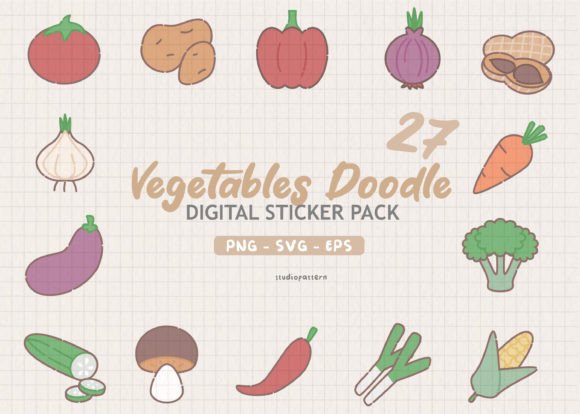
Embroidery Review: Vegetable Doodle Stickers Design
As someone who designs embroidered goods for clients and my own small shop, I’m always looking for graphics that translate well into stitches. When I first saw this set of Vegetable Doodle Stickers, my immediate thought was “this feels friendly.” It’s not a formal botanical illustration; it’s playful. That’s a specific mood, and it tells me exactly where this design belongs.
The Handmade Personality of a Doodle
The charm here is in the simplicity. The lines are clean but have a sketched, hand-drawn quality. For embroidery, that’s a great starting point. Too much intricate detail can get lost or become a dense, stiff patch of thread. These doodles, however, look like they’d translate into satin stitches and clean running outlines beautifully, keeping that lighthearted feel intact. I imagine them on a child’s apron, a gardener’s tote bag, or a set of kitchen towels for a boutique. They create a sense of whimsy rather than precision.
Where These Vegetables Come to Life in Stitches
I picture using a single carrot or tomato from this set on a custom baby bib. The scale is right—not too big, not too small—and the theme is universally cute and wholesome. For a holiday gift, like a personalized apron for a home cook, grouping a few of these doodles together around a name would create a cohesive, custom look without being overly complicated to stitch.
For commercial embroidery projects, such as a line of sweatshirts for a small farm stand or a local café, this style offers brand consistency. It’s approachable. You could use the same pea pod or radish design across different products—caps, tea towels, tote bags—and it would feel like part of a collection, not just a random graphic. The high-resolution nature mentioned in the description is key here; starting with a clear, well-organized file means my embroidery software can interpret the paths cleanly, which is half the battle.
A Practical Scenario: The Embroidered Market Tote
Let’s walk through a real case. I’m preparing a batch of embroidered canvas tote bags for a spring market. I want something fresh, gender-neutral, and not seasonal. I select the bell pepper and corn doodles from this set. Their shapes are distinct but not overly complex. On a medium-weight canvas, I’d use a medium-density fill stitch for the main bodies and a satin stitch for the outlines. The result would be crisp, with enough visual weight to stand out but not so heavy that the bag feels stiff. Customers at the market would instantly recognize the theme—fresh, simple, handmade—which adds to the product’s value and story.
Where This Design Requires a Careful Hoop
While the style is forgiving, there are always considerations. On very textured fabrics like a thick sweater, the simpler shapes will hold up better than tiny details, but I’d still test the stitch density. For dark fabric backgrounds, I’d plan my thread colors carefully to ensure the lighter doodle lines pop; sometimes a graphic that looks great on a white mockup needs contrast adjustments when stitched onto navy.
The “full customizable” note is crucial here. If I need to slightly adjust a line or simplify a tiny leaf corner for a smaller hoop size—say, for a child’s hat—that flexibility is what makes a digital design asset truly practical. Speaking of small hoops, while these doodles aren’t microscopic, applying them to something like a curved cap surface requires checking that the design’s layout isn’t too wide or tall for the area. Always stitch it out on scrap fabric first, using the proper stabilizer for the final garment.
How It Elevates a Finished Product
From a business perspective, a design like this affects more than just aesthetics. It builds customer trust through consistency. If I’m an Etsy seller offering a line of garden-themed goods, using this coherent doodle style across embroidered pillow covers, patches, and baby blankets makes my shop look curated and professional. It enhances the giftability of the items—they feel purposefully designed, not random.
For digital product sellers, these graphics could serve as excellent printable mockups or preview images for their own listings. However, for embroidery, the real value is in the finished, tactile product. A client receiving a custom embroidered kitchen towel with these cheerful veggies isn’t just seeing a sticker; they’re seeing skilled craftsmanship applied to a relatable, fun graphic. That combination drives engagement and repeat business.
Notes for the Working Designer
Before committing this design to a client project or a batch of merchandise, here’s my practical checklist:
- Test the embroidery file on the actual scrap fabric you’ll use, especially if it’s stretchy or thin.
- Review the stitch density in your software—does it match the fabric weight?
- Check how the small details, like little stems or dots, stitch out. They might need a slight adjustment to remain clear.
- Compare light and dark fabric backgrounds in black and white mockups to gauge contrast.
- Always confirm the licensing terms. The description notes it’s good for printing and use as physical stickers, but for commercial embroidery projects where I’m selling the finished stitched product, I need explicit confirmation that the license covers that derivative use.
- Remember, a graphic being “high-resolution” and “well organized” is a promise of technical quality, but the embroidery result depends on your machine settings, thread, and fabric. The design gives you a great starting point, but you bring it to life.
A Final Stitch of Realism
This Set of Vegetable Doodle Stickers isn’t a one-size-fits-all embroidery solution. It’s a specific style tool. Its strength is in creating a friendly, handmade personality across a range of everyday items—from personalized gifts to small shop merchandise. It won’t work for formal corporate apparel, but for the world of craft businesses, creative entrepreneurs, and makers who value approachable charm, it’s a solid design asset. As with any embroidery file, your skill in execution turns the potential on screen into a beautiful, durable product that customers will love and use. That’s where the real project begins.