Fruits Tracing Worksheets as a Versatile Graphics & Coloring Pages Asset
A Designer’s First Impression: Fresh, Playful, and Approachable
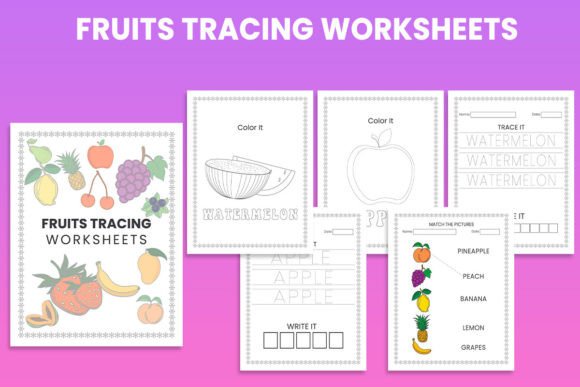
Opening the Fruits Tracing Worksheets asset bundle, my immediate thought is, “This is perfect for a project needing a warm, handmade feel.” The visual style isn’t slick or corporate; it’s friendly and engaging. The tracing-line aesthetic suggests a sense of discovery and learning, which translates beautifully into designs meant to feel welcoming, creative, and slightly nostalgic. This isn’t a cold, minimalist graphic design asset; it’s an illustration set that adds personality.
This asset naturally fits client projects centered around family, education, wellness, natural products, handmade goods, or seasonal campaigns. Imagine a boutique selling organic children’s apparel, a local farmer’s market launching a summer event, or an Etsy shop specializing in printable design kits for parents. The cheerful, simple fruit outlines establish a mood of wholesome authenticity.
Where Fruits Tracing Worksheets Elevates Real Client Projects
In practical creative design work, these worksheets are more than just clipart. They become foundational design assets for building a cohesive visual language. For a small business branding project for a kids’ café, I could use the apple or berry outlines as a repeating pattern on their product labels and packaging design. The SVG files allow clean scaling for a large window decal or a small sticker on a juice bottle, ensuring brand consistency.
For social media graphics and marketing visuals, these elements are gold. A pear outline could become a frame for an Instagram post announcing a new smoothie flavor, adding visual hierarchy and emotional appeal. In editorial design for a blog about healthy eating, the assets could serve as decorative accents beside recipes, breaking up text and increasing audience engagement. For a print-on-demand seller, this bundle is a toolkit: the AI and SVG files mean these fruits can be adapted for t-shirt design, sublimation design on mugs, or Cricut projects for custom sticker design and tote bags.
Strong Applications: Where This Asset Shines
- Large layout areas and hero graphics: The simple forms work beautifully as bold, welcoming visuals on a website banner or event poster.
- Themed collections and campaign visuals: Using multiple fruits together creates a cohesive, festive look for a “Summer Harvest” promotion.
- Product mockups and packaging details: As a subtle repeat pattern or a single iconic element, it adds polish to commercial design assets.
- Printable designs and Canva templates: The provided PDFs and vectors allow creators to quickly build coloring sheets, invitations, or wall art with a professional, unified look.
- Supporting brand elements: Beyond a primary logo, these can serve as secondary icons for different product lines or social media badges.
Designer Considerations: Where to Use with Care
While versatile, Fruits Tracing Worksheets requires thoughtful application. The tracing-line detail, which gives it its charm, can become lost or messy in certain contexts. In small sizes, like a tiny favicon or a small line on a crowded business card, the detail may blur, harming readability and visual trust. On complex backgrounds or in low-contrast designs, the outlines might not stand out clearly, weakening the visual hierarchy.
This asset is generally not suited for professional corporate materials like annual reports or formal financial presentations, where a modern design requires very clean, abstract iconography. For projects demanding minimalist branding, the illustrative style might feel too specific and playful. The key is to match the asset’s mood to the client’s brand voice.
Contexts Requiring Extra Attention
- Fine details in small-scale print applications.
- Layouts with many competing graphic elements.
- Brands requiring ultra-sleek, abstract symbolism.
- Designs where the primary goal is stark, authoritative clarity.
The Practical Designer Checklist Before Client Use
Before integrating Fruits Tracing Worksheets into a paid client project, I run through a standard set of real-world tests. This ensures the final deliverable feels polished and technically sound.
First, I test it in black and white. How does the outline hold up without color? This is crucial for any print application where color might be expensive or for designs that may be photocopied. Next, I check contrast on light and dark backgrounds. Does the strawberry outline disappear on a pale yellow background? Does it pop on a deep green? I preview it at small and large sizes—from a social media avatar to a full-page poster—to see if the detail scales appropriately.
I then place it on real mockups. Using the SVG or AI files, I overlay a fruit graphic on a product mockup of a t-shirt, a book cover, or a packaging template. This reveals how it interacts with textures and shadows. For printable designs, I test print quality at home to check for crisp lines. A review of the provided file formats is essential: the AI files offer full editability for custom color matching with a brand palette, while the PDFs are ready-to-use for quick client handoffs.
Finally, I always confirm commercial licensing. As a digital product intended for commercial design, this asset bundle should allow use in client work, Etsy products, and print-on-demand items without legal worry. This due diligence protects both my practice and the client’s business.
Integrating with Typography and Final Project Polish
The success of a design asset often hinges on how it pairs with typography. Fruits Tracing Worksheets has a handmade, approachable line quality. It pairs wonderfully with a friendly script font or a rounded sans serif font for a cohesive, warm look. It can create interesting contrast with a clean, modern sans serif font for a “craft-meets-contemporary” vibe. However, it might clash with a formal serif font or an aggressive display font style unless the contrast is deliberately sought.
When used thoughtfully, this asset elevates the overall impression of a project. It moves a design from generic to thematic, from plain to personable. For a client in the creative marketplace, using these illustrations can make their marketing visuals feel cohesive and intentionally crafted, boosting perceived professionalism. It’s not just a graphic; it’s a stylistic choice that tells a story about the brand—one of freshness, creativity, and hands-on joy. In the right project, Fruits Tracing Worksheets transforms from a simple collection of files into a powerful tool for building authentic, engaging brand identity.